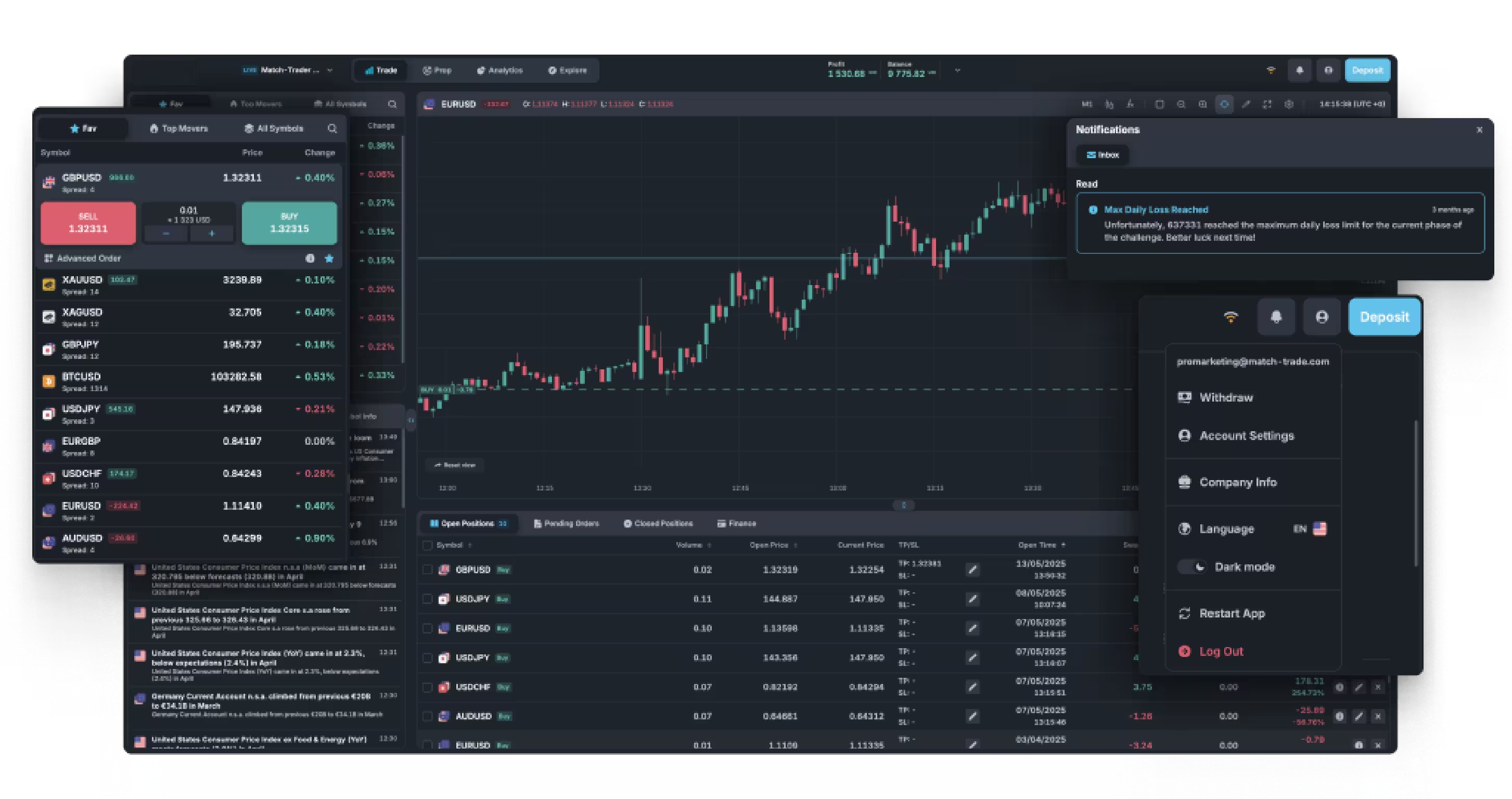
Take Control of Your Product Data

Centralized Product Management Across Suppliers and Channels

Stop wasting time fixing supplier files and updating spreadsheets.

With our PIM solution, all your product data flows into one central hub — automatically cleaned, enriched, and distributed across every channel with accurate pricing, stock, and availability.
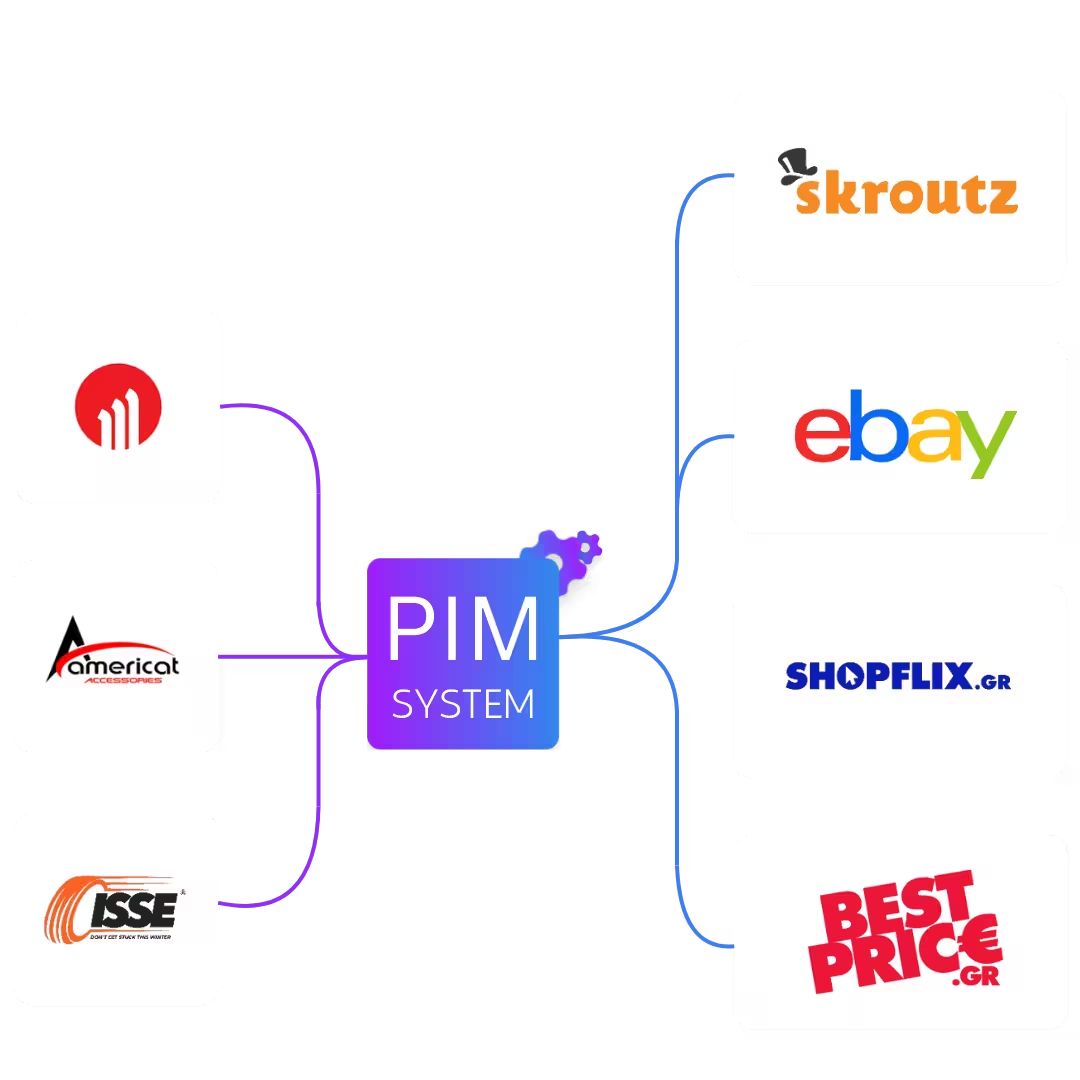
PIM System - Centralized product management connecting suppliers to marketplaces

OUR SOLUTION

Why Product Data Is Holding You Back

Centralized Product Management Across Suppliers and Channels

Stop wasting time fixing supplier files and updating spreadsheets.

With our PIM solution, all your product data flows into one central hub — automatically cleaned, enriched, and distributed across every channel with accurate pricing, stock, and availability.

THE RESULT ?

Duplicate products from multiple supplier

Discontinued items still showing as available

Inconsistent product info across channels

Pricing errors and missing discount rules

Stock mismatches that frustrate customers

Teams wasting 20+ hours a week on manual updates

How it works

PIM stands for Product Information Management.

A PIM system is software that collects, organizes, and manages all the product data a business uses — things like names, descriptions, prices, stock, images, and supplier details.
Instead of juggling spreadsheets, xml files, and supplier feeds, a PIM gives you:

01

One place

where all product data lives

02

Consistent updates

across every sales channel and ERP system

03

Less manual work

for your team

04

Accurate pricing, stock, and availability

everywhere your products are sold

Our Approach

Platform + Services

We don't just give you a PIM tool we set up a working solution.

Data Source Review:

We review your suppliers, other eShops, and system integrations.

Onboarding & Setup:

Our team configures Cubik PIM workflows, mappings, validations, and business rules tailored to your operations.

Automation:

From then on, everything runs automatically. Cubik PIM imports supplier feeds, applies pricing logic (markups, discounts), synchronizes stock & availability, and distributes updates to every sales channel.

Multi-Channel Distribution:

One catalog can power multiple stores and platforms — for example, two B2C eShops, one B2B platform, and a marketplace feed like Skroutz — all in sync, all automatic.

ERP Integration:

PIM connects directly with ERP systems — as an input source for product data or as an output channel — with ready drivers for SoftOne, Pylon, Megasoft, and custom connectors on demand.

Training:

We train your team so they can use Cubik PIM independently — saving time, reducing costs, and avoiding reliance on external support.

Ease of Use:

After setup, your staff works with a clean, intuitive system — no bottlenecks, no errors, no extra load on your eCommerce platform.

Fast Delivery:

Depending on the number of suppliers and sources, Cubik PIM can be configured from just a few hours to a few days — not weeks.

What You Get

PIM Dashboard Interface

Benefits That Matter

  • One source of truth for all product information
  • Automated supplier feed integration (CSV, XML, JSON, APIs)
  • Automatic distribution to multiple sales channels (B2C, B2B, marketplaces, apps)
  • ERP-ready — send and receive product data with your back-office systems
  • Duplicate detection and discontinued product cleanup
  • Accurate pricing with markup/discount rules
  • Stock and availability always up to date
  • Built-in validation and quality control
  • No heavy load on your commerce systems — all processing happens in Cubik PIM

How it works

STEP 1

Review & Design

We review your product data sources, suppliers, and sales channels.

STEP 2

Setup & Onboarding

We configure Cubik PIM workflows, pricing rules, and integrations — while training your team.

STEP 3

Go Live

We migrate your data, automate processes, and launch. From here, your PIM handles product data automatically across every sales channel.

FAQ

Q: How long does implementation take?

A: Most businesses go live from just a few hours to a few days, depending on the number of suppliers and data sources.

Q: Will my suppliers need to change their formats?
Q: What about our existing product data?
Q: Will my team need technical expertise to manage it?